
Computation is advancing faster than the probe.
Aleph’s silent-speech result is not a brain interface. It is something strategically useful anyway: a live demonstration of software outrunning ultrasound form factor.
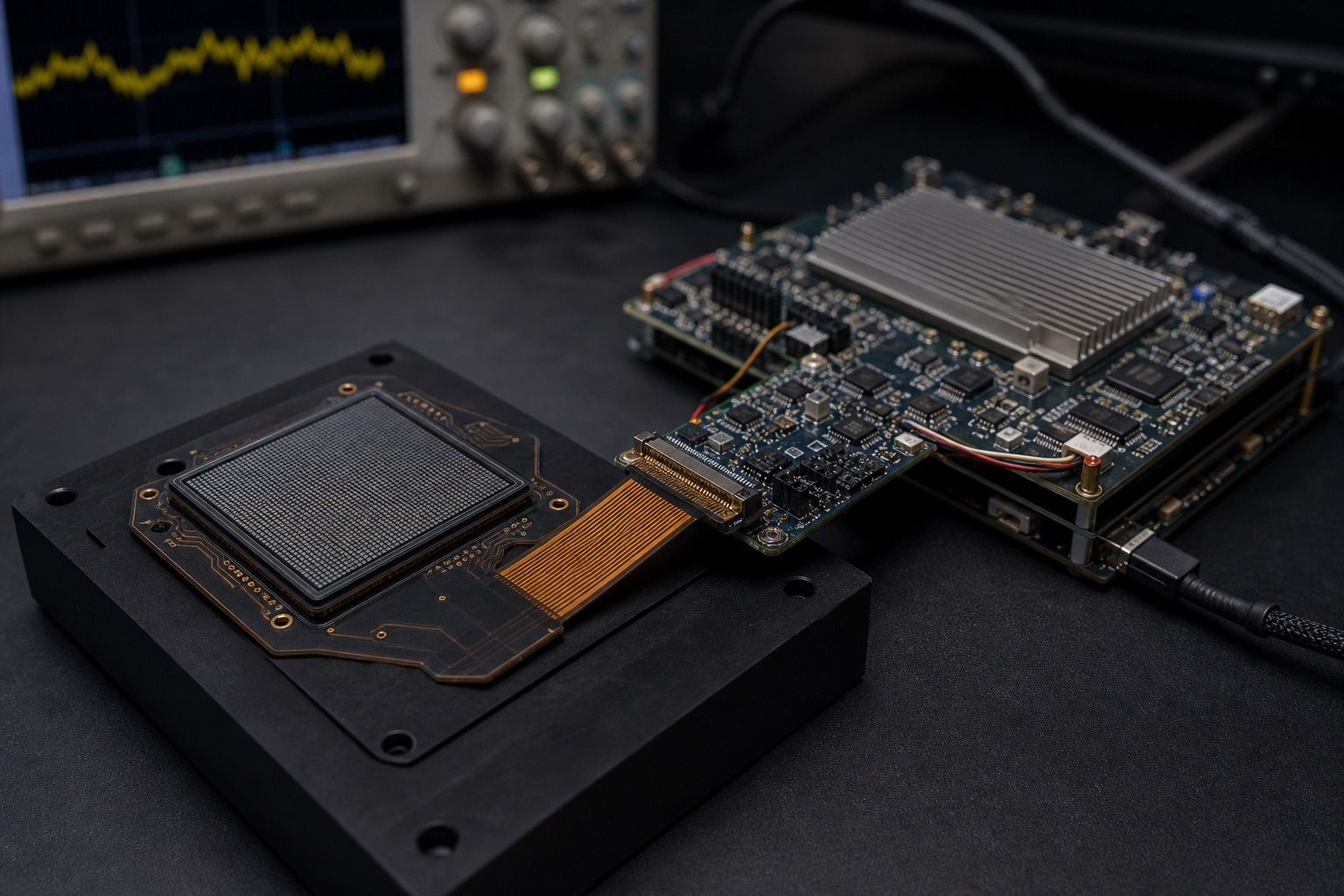
A month of computation meets decades of hardware
Aleph reported an open-vocabulary silent-speech system trained from roughly fifty hours of ultrasound tongue imaging. The experiment moved quickly. Its product constraints did not: the probe still had to be held beneath the chin, coupling quality had to be monitored, and gel remained part of the interface.
Aleph identifies smaller, lighter ultrasound hardware and practical coupling as the next step toward a wearable or adhesive patch. That is direct evidence of the customer pattern Ambient is designed around.
What the result does not prove
Tongue ultrasound measures articulation. It does not read brain activity, establish transcranial fUS decoding, or remove the physiological latency of hemodynamic signals.
The correct conclusion is narrower: a computationally exceptional team can create a convincing neural-adjacent application before it can obtain hardware shaped for the application.
The opportunity is not to sell the team another scanner. It is to make the scanner disappear into the interface.
The design-partner question
The question we ask frontier teams is simple: which future experiment is impossible with the probe you have today, and what measured hardware specification would make you fund the alternative?